
Spin Wheel: 7 Easy Lessons for Confident Probability Checks
A Spin wheel can look simple while hiding an important question: what makes each outcome possible? Before reading a percentage from coloured slices, you need to know whether the entries have equal chances, whether weights apply, and whether anything changes after a result. This guide explains those differences with original notebook exercises for Indian readers.
Our seven lessons use imaginary labels and clearly stated assumptions. They do not describe a current Yono offer, certify an app’s random process or promise a prize. You can do the calculations without opening a game or making a payment. Browse the Yono Slots home page for other reading topics, and keep a calculator beside your worksheet.

1. State the Spin wheel model before calculating
Start with a sentence that describes the selection rule. For example: “There are eight equally likely entries, the list stays unchanged after every result, and each selection is independent.” That sentence does more work than the word random on its own.
For this Spin wheel model, label the entries A through H. Each individual entry has one chance out of eight on a selection. As a fraction that is 1/8; as a decimal it is 0.125; as a percentage it is 12.5%. These are three ways of writing the same probability.
The denominator counts every equally likely entry, not just the ones you would prefer to see. If you focus on A and B but the wheel still has eight entries, you cannot call A a one-in-two result. The other six possibilities have not disappeared.
Also separate an entry from a label. A list may contain the word Mango more than once. If three equally likely entries say Mango, the label has three chances, even though it is one word. Counting unique words and counting selectable entries answer different questions.
Write down anything you do not know about a real display. An image may omit weights, show only part of a list or use an animation unrelated to slice size. In those cases, mark the exact probability unknown. The exercises below are solvable because their assumptions are stated explicitly.
2. Count equal Spin wheel entries accurately
Imagine a ten-entry Spin wheel with four blue labels, three green labels, two yellow labels and one red label. Every entry is equally likely. The blue-label probability is 4/10, or 40%; red is 1/10, or 10%. The probabilities follow the counts in this defined model.
| Label | Entries | Fraction of ten | Percentage |
|---|---|---|---|
| Blue | 4 | 4/10 | 40% |
| Green | 3 | 3/10 | 30% |
| Yellow | 2 | 2/10 | 20% |
| Red | 1 | 1/10 | 10% |
Check the totals before continuing. Four plus three plus two plus one equals ten entries. Forty plus thirty plus twenty plus ten equals 100%. If either total is wrong, repair the input table before interpreting any result.
A useful Spin wheel question is “blue or green?” These labels occupy separate entries, so their counts add: four plus three equals seven out of ten, or 70%. The remaining yellow-or-red probability is three out of ten, or 30%. Together those two groups cover the list.
Now change the question to “not red”. There are nine entries that do not say red, giving 9/10 or 90%. This is the complement of the red event. It is often easier to count the excluded outcome and subtract its probability from one.
None of these numbers guarantees a particular run of results. A 40% label does not have to appear exactly four times in the next ten selections. The percentage describes the model for each selection, while a short observed sequence can differ from that proportion.
3. Read Spin wheel weights instead of guessing from artwork
A weighted Spin wheel assigns different selection weights to its entries. For a defined weighted model, divide one entry’s weight by the sum of all weights. Do not divide by the number of labels unless the weights are equal.
Suppose a practice list has Chai with weight five, Nimbu Pani with weight three and Water with weight two. The total weight is ten. The resulting probabilities are 5/10, 3/10 and 2/10: 50%, 30% and 20%. They are not one-third each.
Double every weight to ten, six and four. The total becomes twenty, but the probabilities stay 10/20, 6/20 and 4/20. Only the relative weights matter in this model. A larger-looking total weight does not automatically improve the chance of any one label.
For another Spin wheel comparison, give Chai weight two and Water weight one. Chai then takes two of three total weight units, not two of two labels. Its probability is two-thirds. The phrase “twice the weight” describes a ratio, not a guaranteed alternating pattern.

The small wheel icon in this artwork is not a probability table. It does not reveal a complete outcome list, selection weights or whether the list changes. A bright prize label elsewhere in an advertisement cannot supply those missing facts. Keep every calculation tied to a stated model.
For Spin wheel reading, make a three-column note: visible fact, missing information and conclusion. “A wheel icon is visible” belongs in the first column. “Weights are not provided” belongs in the second. “Exact chances cannot be calculated from this picture” is the supported conclusion.
4. Distinguish independent Spin wheel selections from removal
With independent selections and unchanged probabilities, knowing an earlier result does not change the next selection’s chances. In our ten-entry example, red remains 10% on the next selection even if the previous two results were red. A repeat is possible without changing the rule.
For this Spin wheel model, the probability of red twice in two specified selections is 1/10 × 1/10 = 1/100, or 1%. That is the probability of the complete two-result sequence before it happens. After the first red is known, the chance of another red is still 1/10.
Do not confuse those two questions. “What was the chance of red-red from the start?” and “What is the chance of red now, given the previous red?” have different amounts of information. Writing the question in full helps stop a common percentage mistake.
A removal model behaves differently. Start with ten equally likely entries, one red, and remove the selected entry after each result. If red is removed first, red cannot appear next. If a blue entry is removed first instead, red is one of nine remaining entries.
The next red probability in that second case is 1/9, about 11.11%. The Spin wheel model changed because the list changed. This is a practical reason to check whether a “remove result” option is active before assuming selections have the same probabilities.
A changing list does not make a calculation impossible. It means you must update the denominator and remaining labels after each step. Keep independent-with-replacement and removal exercises on different notebook pages so that you do not accidentally mix their rules.
5. Check Spin wheel streaks without calling a result due
A short history can be interesting without becoming a forecast. In an independent Spin wheel model, several results without red do not make red more likely on the next selection. The probability comes from the unchanged model, not from how long you have been waiting.
Return to the eight equally likely entries A through H. If A is the label of interest, “not A” has probability 7/8 on each independent selection. The chance of no A in three specified selections is 7/8 × 7/8 × 7/8 = 343/512, about 66.99%.
The chance of at least one A in those three selections is the complement: 1 − 343/512 = 169/512, about 33.01%. This includes A appearing once, twice or three times. It is not the same question as getting A on the third selection only.
For Spin wheel practice, label each answer with its time frame. “Next selection: 12.5%” differs from “at least once over three selections: about 33.01%”. The longer time frame changes the event being measured. It does not improve the next individual selection’s probability.
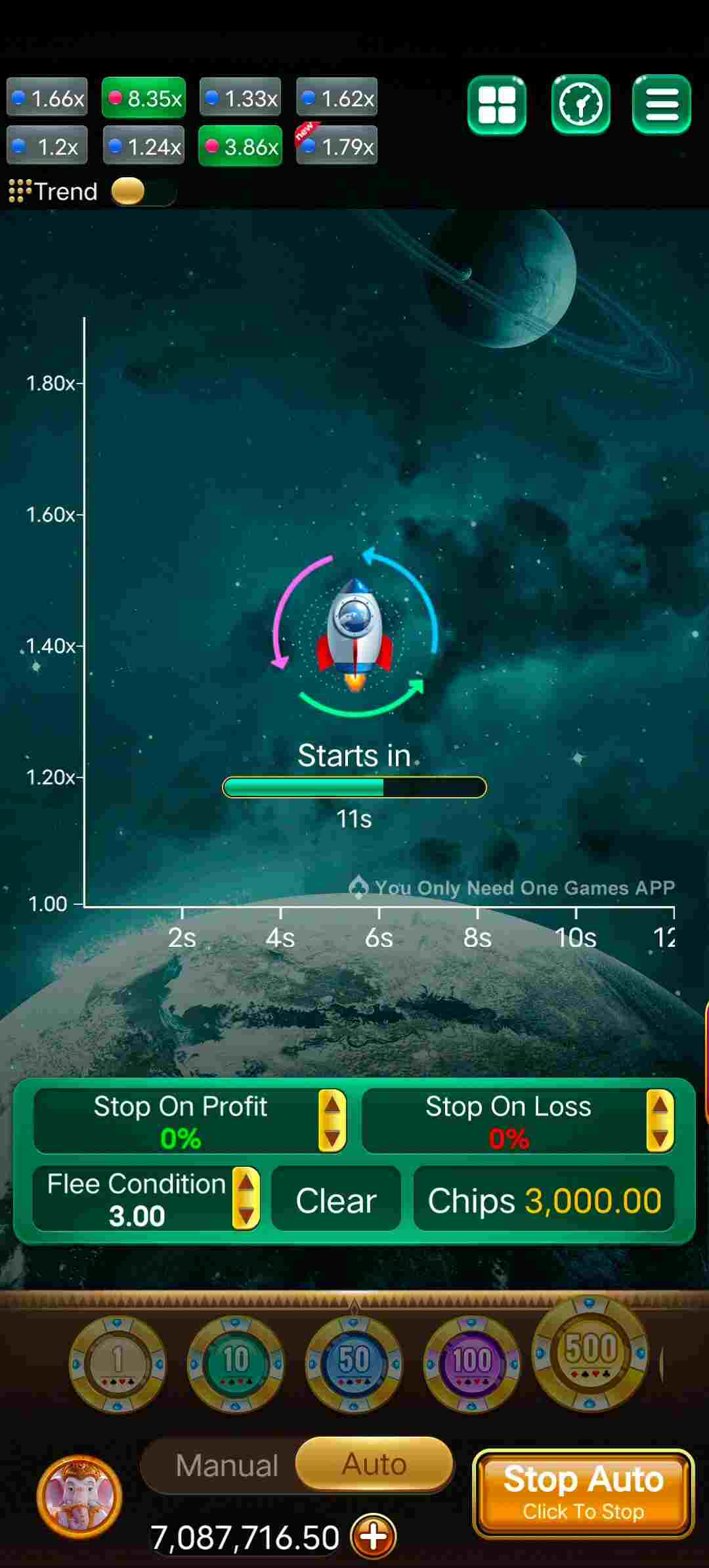
The screenshot has a row of earlier multipliers and a separate game display. Those numbers do not turn it into a wheel, and their colours do not define our A-through-H model. Recognising the type of display is part of reading information accurately.
In a Spin wheel worksheet, record an observed history as data and a future probability as a model statement. Keep them in separate columns. If you cannot explain why the past sequence should alter the mechanism, do not turn a recent pattern into a “must happen next” claim.
6. Separate a Spin wheel observation from proof
Suppose you record twenty results from the ten-entry equal model. Blue appears eleven times, green four times, yellow three times and red twice. The observed blue proportion is 11/20, or 55%, while the defined single-selection probability is 40%.
Those figures describe different things. One is the proportion in a small sample; the other is a rule of the hypothetical model. A difference does not by itself prove that the Spin wheel mechanism changed. It also does not establish that a real app is fair or unfair.
| Label | Observed count | Observed proportion | Defined model probability |
|---|---|---|---|
| Blue | 11 | 55% | 40% |
| Green | 4 | 20% | 30% |
| Yellow | 3 | 15% | 20% |
| Red | 2 | 10% | 10% |
Check the counts: eleven plus four plus three plus two equals twenty. The observed percentages add to 100%. The red row matching its model exactly does not certify the process, just as the blue row differing from its model does not alone establish manipulation.
For a real investigation, you would need reliable information about the selection mechanism, a defined data collection method and an appropriate statistical analysis. This beginner worksheet does not supply an audit or certification. It teaches how to keep a claim within the evidence actually available.
Spin wheel screenshots can be incomplete records. A result may be cropped out, the number of trials may be unclear, or the rules may have changed between sessions. Write those limitations down. An unexplained screenshot is weaker evidence than a complete, consistently collected log.
A simple error check is still useful. Make sure every recorded result fits the stated outcome list and each count refers to the same time window. Do not combine one day’s counts with another day’s denominator or add a cumulative total as though it were a new observation.
7. Use a Spin wheel worksheet with answer checks
Question one gives a six-entry Spin wheel with equally likely labels A, A, B, B, B and C. What is the chance of B? Count three B entries out of six: 3/6 = 1/2 = 50%. Counting the three unique labels would give the wrong denominator.
Question two uses three labels with weights A = two, B = three and C = five. The total weight is ten, so B has probability 3/10 = 30%. This is a different model from question one, even though both use the same three letters.
Question three removes one B entry after a B result in the first model. The remaining entries are A, A, B, B and C. There are now five entries and two say B, so the next B chance is 2/5 = 40%, under equal selection among the remaining entries.
Question four keeps the first list unchanged and makes independent selections instead. After a B result, the next B chance stays 3/6 = 50%. This Spin wheel comparison shows why the removal rule is part of the problem, not an optional footnote.
Question five asks for A then C in two specified independent selections from the first list. A has probability 2/6 and C has 1/6, giving 2/36 = 1/18, about 5.56%. The order is specified. A different question asking for either order needs a different calculation.

For a useful Spin wheel answer, state the model, count the full denominator, show the arithmetic and name the event. If one of those details is missing, explain what you still need. That habit is more reliable than reading a percentage from a decorative slice or a recent streak.
Keep your notebook examples separate from promotional claims and account questions. The calculations here do not confirm any current offer, available balance or withdrawal term. Use the site home page when you are ready to explore another topic.
Check overlapping Spin wheel questions
Here is a final Spin wheel exercise using eight equally likely numbered entries, one through eight. Let one event be an even number, and another be a number greater than five. The even entries are two, four, six and eight. The entries greater than five are six, seven and eight.
If you ask for an even number or a number greater than five, do not add four and three and stop at seven. Six and eight appear in both lists. Count them once each. The combined list is two, four, six, seven and eight: five entries out of eight, or 62.5%.
The overlap is two entries out of eight. Adding 4/8 and 3/8 counts those overlap entries twice, so subtract 2/8 once. The result is 5/8. Writing the actual list first makes the correction easier to understand than memorising a formula without checking what it counts.
In this Spin wheel example, the question “even and greater than five” asks only for the overlap. Its entries are six and eight, giving 2/8 or 25%. Changing the word “or” to “and” changes the event, so it changes the answer even though the wheel itself is unchanged.
For a careful answer check, ask your friend to read the question aloud before using a calculator. Underline “and”, “or”, “not” or “at least once” wherever it appears. Then list the entries or complete sequences that satisfy it. Many apparent probability mistakes begin with an unclear question rather than difficult arithmetic.
Keep this exercise on its own sheet, labelled eight numbered equal entries. Do not combine its 62.5% answer with the ten-entry colour model or the weighted drinks model. The denominator and selection rule belong to the specific problem you have defined.
Spin wheel questions Indian readers often ask
Does an equal-looking slice mean an equal chance?
Only if the selection model supports that conclusion. A picture alone may not reveal weights or the complete outcome list. In this guide, equal chances are an explicit assumption for the exercises where we use them.
Can the same label appear twice?
Yes, with an unchanged list and independent selections. A repeat is possible. If the rules remove a label or entry after selection, use the updated list instead. Those are different models with different calculations.
Is a multiplier the probability of seeing it?
No. A displayed value and its selection chance are separate facts. The number printed beside an outcome does not tell you its weight. You need the rule defining the selection process before calculating an exact probability.
What is the first thing to write down?
For a Spin wheel, write the full set of selectable entries and the rule for selecting them. Then record whether the list changes. Once those details are clear, fractions and percentages become much easier to check without guessing.